KNOW YOUR RIGHTS
Kerala High Court Ruling: First Wife Must Be Heard Before Muslim Second Marriage Registration
Understand the landmark 2025 Kerala High Court judgment which mandates that a Muslim man must notify his first wife before registering a second marriage under secular law.
2/10/20263 min read
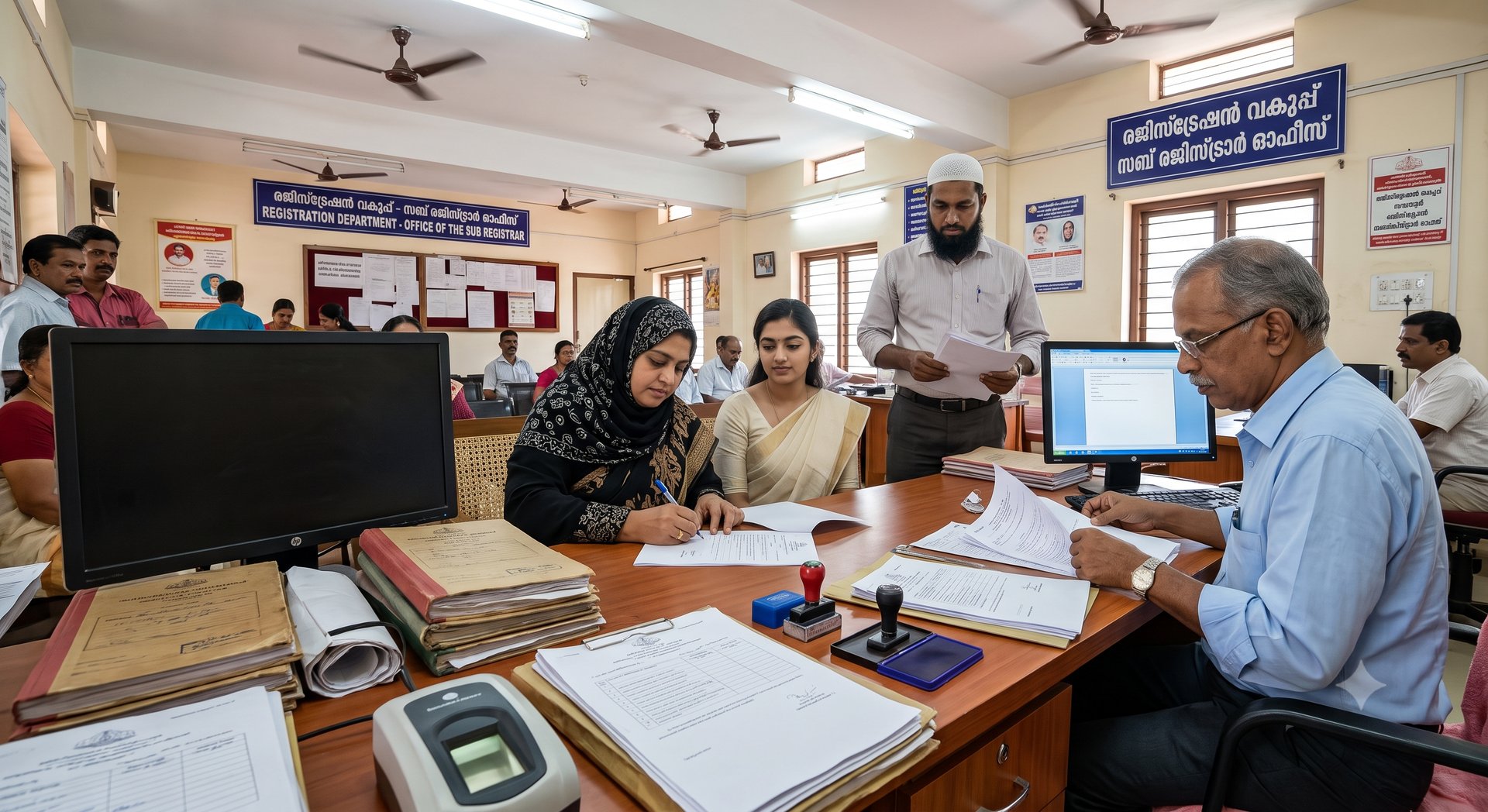
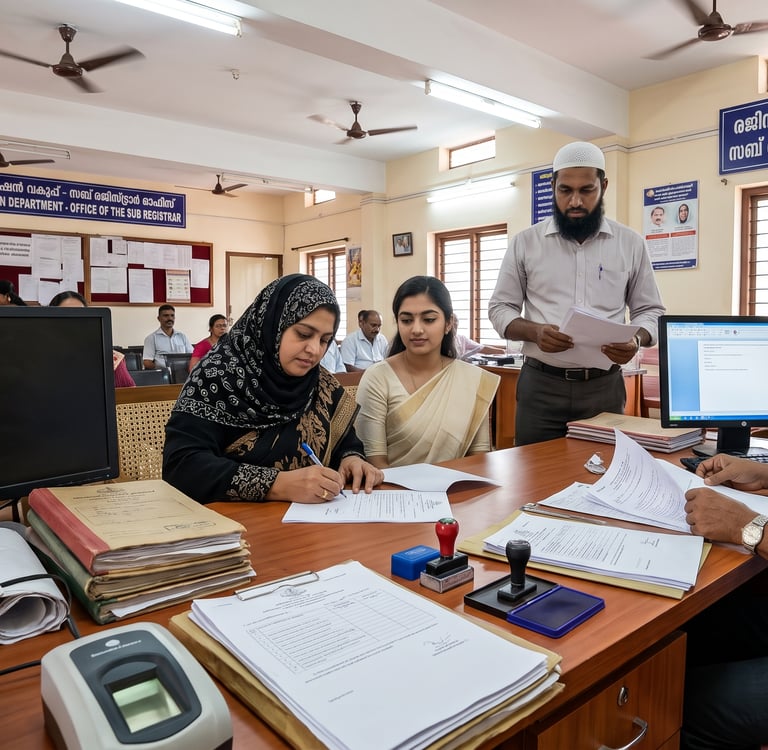
In a landmark and forward-looking judgment that harmonizes personal religious laws with constitutional morality, the Kerala High Court has delivered a definitive ruling regarding the registration of second marriages in the Muslim community. The court held that while Muslim Personal Law permits a man to have multiple wives under specific conditions, he cannot formally register a second marriage under secular state laws without giving his first wife an opportunity to be heard.
This judgment, delivered by Justice P.V. Kunhikrishnan, emphasizes that constitutional rights, particularly gender equality, supersede personal religious customs when interacting with statutory civil authorities. Let’s dive deep into the facts of the case, the legal reasoning, and what this means for marital laws in India.
The Background of the Case
The issue came to light when a 44-year-old man from Kannur and his 38-year-old second wife from Kasaragod approached the High Court. They challenged a decision by a local grama panchayat registrar who refused to register their marriage under the Kerala Registration of Marriages (Common) Rules, 2008.
The registrar declined the application because the man’s first marriage was still legally subsisting, he had two children from it, and the first wife was not made a party to the proceedings. The petitioners argued that Muslim Personal Law allows a man to have up to four wives simultaneously, and therefore, the local self-government institution was legally obligated to register the second marriage.
The Legal Clash: Personal Law vs. The Law of the Land
The core of this case lies at the intersection of customary religious practices and secular statutory rules.
Understanding Muslim Personal Law on Polygamy
Under Muslim Personal Law, polygamy is permitted as an exception, not a rule. The religious texts stipulate that a man may marry up to four wives, provided he possesses the financial means to support all of them and can guarantee strict justice and equal treatment among them. The High Court observed that the Holy Quran does not mandate obtaining the first wife’s consent for a second marriage, nor does it prohibit seeking it.
The Kerala Registration of Marriages (Common) Rules, 2008
While solemnization (the religious ceremony) of a marriage happens under personal law, the registration of that marriage is a civil act governed by secular legislation. The 2008 Rules apply to all citizens in Kerala, irrespective of their religion.
Key Observations by the Kerala High Court
Justice P.V. Kunhikrishnan made several powerful observations that highlight the supremacy of the Indian Constitution:
No "Silent Spectators": The court firmly stated that a Muslim first wife cannot be relegated to being a "mute spectator" while her husband registers a subsequent marriage. Her legal status, financial security, and emotional well-being are directly impacted.
Constitution Over Custom: The judgment explicitly noted, “In such situations, religion is secondary and constitutional rights are supreme.” Gender equality is a fundamental right, and civil authorities cannot process a registration that violates the principles of natural justice.
The 99.99% Rule: Acknowledging the lived realities of women, the judge remarked that 99.99% of Muslim women would naturally object to their husband's second marriage while their own relationship is still valid.
What Happens If the First Wife Objects?
The High Court laid out a clear procedural pathway for registrars across the state:
Notice is Mandatory: Upon receiving an application to register a Muslim man's second marriage, the registrar must issue a formal notice to the first wife.
Right to a Hearing: The first wife must be given an opportunity to present her views.
Civil Court Intervention: If the first wife objects and claims the second marriage is invalid, the registrar must not proceed with the registration. Instead, the parties will be directed to approach a competent civil court to establish the validity of the second marriage under personal law.
Why This Ruling Matters?
This decision is a massive step forward for women's rights within the framework of personal laws. It does not invalidate Muslim Personal Law or ban second marriages. Instead, it ensures transparency and procedural fairness.
For instance, if a husband has neglected his first wife or failed to maintain her and their children, the mandatory hearing allows her to voice these grievances before the second marriage gains statutory recognition. It protects her rights to inheritance and maintenance, preventing her from being blindsided by administrative processes.
Conclusion
The Kerala High Court’s ruling is a balancing act between respecting religious freedom and upholding the constitutional mandate of equality. By ensuring that the first wife is heard, the judiciary has injected a much-needed layer of transparency and fairness into the administrative processes governing marriage. It serves as a reminder that while personal laws guide how marriages are solemnized, the law of the land guarantees dignity and natural justice for all citizens.
For more legal insights, rights awareness, and updates, keep following Legalfriendamithab.
CONTACT
Reach out anytime for legal support.
Phone
+91 6238662323
© 2026 Adv.Amithab Sankar. All rights reserved.